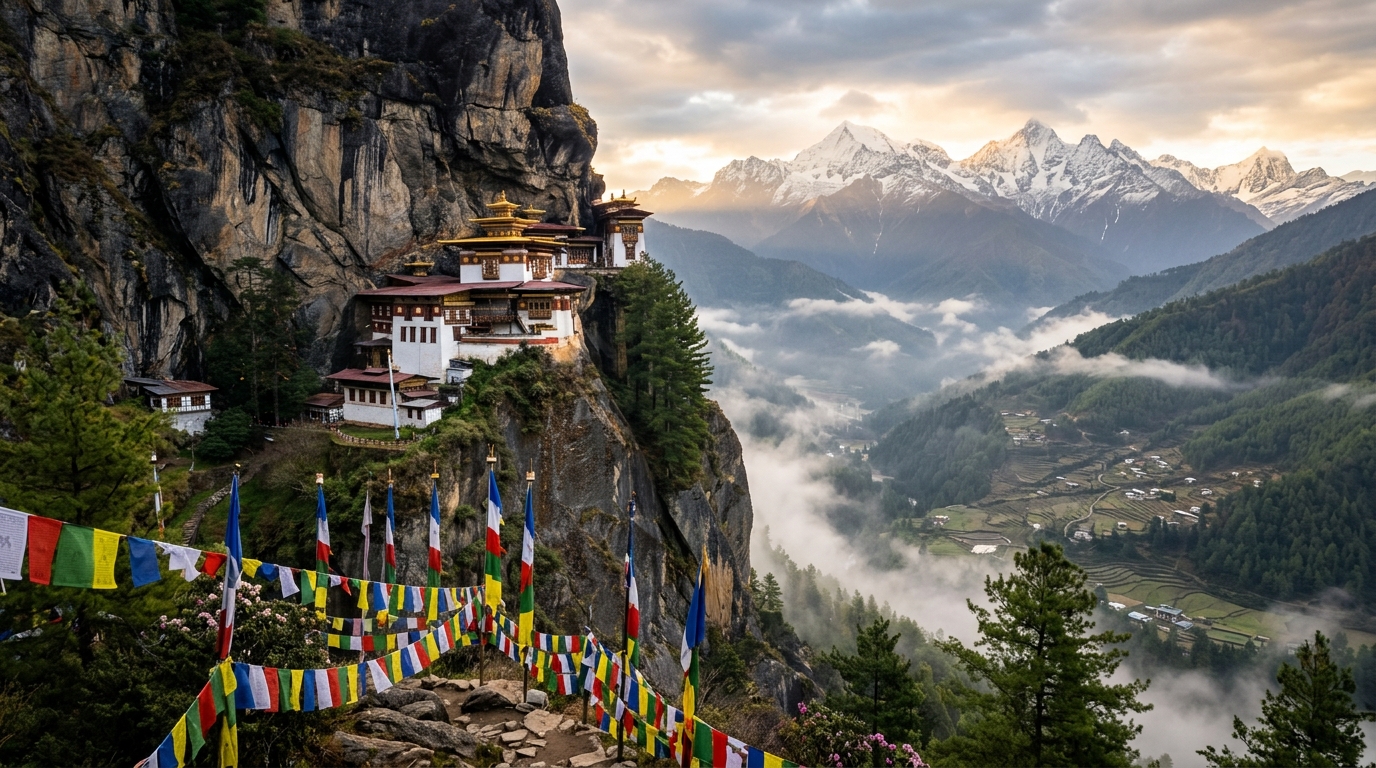
Majestic Bhutan Himalayan Mountain Valley
🏔️ PRACTICAL RESOURCE CENTRE • UPDATED 2026

PLAN YOUR BHUTAN JOURNEY WITH CONFIDENCE

Everything you need to know before visiting the Last Himalayan Kingdom.

Bhutan is a country of high mountains, living Buddhist traditions, and unhurried grace. This comprehensive resource covers official entry procedures, statutory fees, flight logistics, and cultural etiquette to help you prepare seamlessly.

📋 US$40 Visa Fee (Handled for you)
🌿 US$100 / Night SDF Statutory Tax
✈️ Direct Paro (PBH) Flights
🍂 4 Distinct Himalayan Seasons

Visa & Sustainable Development Fee (SDF)

Clear, official guidance on government requirements and entry documentation for international visitors.

📋

We Coordinate Your Visa Clearance

Department of Immigration Bhutan

For most international visitors, a tourist visa is required prior to boarding your flight to Bhutan. Visitors from India require an entry permit, while visitors from Bangladesh and the Maldives follow bilateral agreements.

When you travel with Make Memories Tours & Trek, our founder Kinley Tshering coordinates the entire visa application directly with the Department of Immigration on your behalf.

  • • Visa Fee: US$40 per person (one-time government charge).
  • • Passport Validity: Must be valid for at least 6 months beyond your departure date.
  • • Required Documents: Clear colour digital copy of passport photo page + recent digital passport-style photo.
  • • Processing Time: Typically 3 to 5 business days once documents are submitted.
🌿

Sustainable Development Fee (SDF)

Statutory Royal Government Contribution

Bhutan's unique "High Value, Low Volume" tourism policy is founded on ecological sustainability, cultural protection, and environmental conservation. The SDF directly funds free national healthcare, education, carbon-neutral projects, and heritage restoration.

The fee ensures Bhutan remains pristine, tranquil, and carbon-negative for generations of travelers and locals alike.

  • • Current SDF Rate: US$100 per adult per night for international visitors.
  • • Children's Concessions: 50% concession (US$50/night) for children aged 6 to under 12.
  • • Young Children: Children under 6 years of age are completely exempt from the SDF.
  • • Invoicing: The SDF is statutory government revenue and is itemised with 100% transparency alongside your tour package.

Flights to Bhutan & Travel Insurance

How to reach Paro International Airport comfortably and protect your Himalayan travel investment.

✈️

Arriving in the Himalayas

Paro International Airport (PBH)

Flights into Paro International Airport (PBH) are operated exclusively by Bhutan's two carriers: Drukair (Royal Bhutan Airlines) and Bhutan Airlines.

Frequent connections operate through major Asian transit hubs:

  • • Bangkok (BKK) — Daily flights, ideal international transfer gateway.
  • • Delhi (DEL) & Kolkata (CCU) — Daily connections from India.
  • • Kathmandu (KTM) — Spectacular Himalayan ridge flight past Everest.
  • • Singapore (SIN) — Direct bi-weekly flights for Southeast Asia & Oceania.
💡 Kinley's Practical Advice: Because Paro airport is visual-flight-only due to surrounding mountain valleys, flights can occasionally experience weather delays. We strongly recommend allowing a minimum 4 to 6-hour buffer (or overnight stay) before any onward long-haul international flights.
🛡️

Comprehensive Travel Insurance

Required Protection for Mountain Travel

Comprehensive international travel insurance is strongly recommended for every guest visiting Bhutan. Mountain travel involves remote valleys and varied altitudes where having proper coverage offers complete peace of mind.

Ensure your travel insurance policy explicitly covers:

  • ✓ Emergency Medical Evacuation: Helicopter evacuation coverage for remote mountain valleys.
  • ✓ Trip Cancellation & Curtailment: Protection against unexpected flight cancellations or personal emergencies.
  • ✓ Luggage Delay & Loss: Compensation if baggage is delayed during international transit.
  • ✓ High-Altitude Trekking: If your itinerary includes high passes or treks (such as Druk Path or Chomolhari), ensure coverage for elevations up to 4,500m+.

When to Visit Bhutan

Bhutan experiences four distinct seasons, each offering a completely unique atmosphere, landscape, and cultural experience.

March – May

🌸 Spring

Rhododendrons and wildflowers burst into bloom across the mountain ridges, while jacarandas turn Punakha valley violet. Days are pleasantly warm and valleys are vibrant with new agricultural life.

Best for: Nature enthusiasts, botanists, hiking, Paro Tshechu festival.
June – August

🌿 Summer

Lush emerald rice paddies carpet the valleys, forests are deeply green, and waterfalls cascade down cliffs. Rain showers occur mainly in late afternoon or night, leaving crisp mornings and uncrowded sights.

Best for: Solitude, green photography, mushroom foraging, peaceful sanctuaries.
September – November

🍁 Autumn

The golden season and most popular time to visit. Crystal-clear skies reveal breathtaking views of Himalayan snow peaks. Fields turn gold for harvest, and the kingdom's largest Tshechu festivals take place.

Best for: Mountain panoramas, high-altitude trekking, Thimphu & Black-Necked Crane festivals.
December – February

❄️ Winter

Sunny, brilliant blue skies during the day with crisp, cold mountain nights. Rare and sacred Black-necked Cranes roost in the tranquil glacial valley of Phobjikha. Lower valleys like Punakha remain mild.

Best for: Clear photography, birdwatching, uncrowded dzongs, peaceful mindfulness.

🎭 Bhutan Festival Calendar 2026

More than 160 sacred festivals take place across Bhutan each year. Known as Tshechus, these vibrant celebrations feature sacred masked Cham dances, religious blessings, and joyful community gatherings. Dates follow the lunar Bhutanese calendar.

VIEW OFFICIAL 2026 CALENDAR →

Practical Bhutan Essentials

Key everyday details on money, mobile networks, power outlets, culinary delights, and altitude health.

💰

Currency & Cards

The Bhutanese Ngultrum (Nu.) is pegged 1:1 with the Indian Rupee (INR). Major hotels and handicraft shops in Thimphu and Paro accept Visa and MasterCard. Carry cash (Nu. or INR in denominations below 500) for rural village purchases.

🔌

Electricity & Plugs

Standard voltage is 230V at 50Hz. Bhutan uses a combination of British three-pin rectangular (Type G), European two-pin round (Type C), and Indian three-pin round (Type D) sockets. A universal travel adapter is recommended.

📱

Mobile & SIM Cards

Tourist 4G SIM cards from TashiCell or B-Mobile are readily available upon arrival at Paro Airport or in Thimphu. Your guide Kinley will happily assist you in purchasing and activating a local data bundle. Most tourist hotels provide complimentary Wi-Fi.

🌶️

Food & Cuisine

Bhutanese cuisine is hearty and spicy, centred on fresh local chilies and cheese (Ema Datshi), indigenous red rice, and succulent momos. Hotels and restaurants serve delicious mild, continental, Indian, and vegetarian options tailored to your taste.

📷

Photography Etiquette

Photography is warmly welcomed across outdoor courtyards, scenic valley passes, and public festivals. However, photography is strictly prohibited inside the inner shrine rooms of monasteries and dzongs. Always ask respectfully before taking portraits.

⛰️

Altitude & Pacing

Most valley towns sit between 1,300m (Punakha) and 2,400m (Paro/Thimphu), with passes like Dochula reaching 3,100m. Drink plenty of water, avoid rushing uphill on the first few days, and let Kinley pace your journey naturally to ensure easy acclimatisation.

Bhutanese Culture & Temple Etiquette

Bhutan is a sanctuary where sacred spirituality and everyday life intertwine. A little awareness helps you travel respectfully.

🏛️ When Visiting Temples & Dzongs

  • ✓
    Dress Modestly: Wear shirts with long sleeves and long trousers or below-the-knee skirts. Avoid shorts, sleeveless tops, and hats inside monasteries.
  • ✓
    Remove Footwear: Take off shoes before stepping into temple shrine rooms. Slip-on shoes and comfortable warm socks make this easy.
  • ✓
    Walk Clockwise: Always circumambulate stupas (chortens), mani walls, and sacred monuments in a clockwise direction.
  • ✓
    Spin Prayer Wheels: When turning prayer wheels with your right hand, always spin them clockwise as you chant or reflect quietly.

🙏 Sacred Respect & Sanctuary Rules

  • ✕
    Inner Sanctum Photography: Never take photos, record videos, or fly drones inside temple inner sanctums. Keep cameras safely stored until outside.
  • ✕
    Touching Sacred Objects: Do not touch statues, altars, ancient wall murals, or sit on cushions reserved for monastic lamas.
  • ✓
    Speaking Softly: Maintain a calm, respectful tone inside sacred buildings and turn mobile phones to silent mode.
  • ✓
    Small Offerings: Leaving a small donation of Nu. 5 to 50 on temple altars is considered a meaningful gesture of goodwill and merit.

Frequently Asked Questions

Practical answers to common inquiries from our international travellers planning their Bhutan journey.

Do I need a visa before visiting Bhutan?
Yes, most international travellers require a tourist visa before boarding their flight to Bhutan. When you travel with Make Memories Tours & Trek, we coordinate the entire clearance process with the Department of Immigration on your behalf. You simply provide a copy of your passport photo page and a digital photograph.
What is the best time of year to visit?
Spring (March to May) brings blooming rhododendrons, wildflowers, and mild hiking weather. Autumn (September to November) offers brilliant mountain visibility and festive Tshechus. Winter (December to February) has clear blue skies and Black-necked Cranes, while summer is lush and serene.
How many days should I spend in Bhutan?
A 7-day trip is ideal for a balanced introduction to Western Bhutan (Paro, Thimphu, and Punakha). If you wish to experience the tranquil black-necked crane valley of Phobjikha or spiritual Bumthang in Central Bhutan, a 9 to 12-day journey allows an unhurried, deeply enriching pace.
Can I completely customise my itinerary?
Yes, customisation is our greatest strength. Kinley Tshering personally designs every itinerary around your individual timeline, travel companions, physical pace, comfort preferences, and unique cultural interests.
Can families with young children travel comfortably?
Yes! Kinley designs family journeys with unhurried pacing, realistic drive times between valleys, child-friendly traditional farmstays, archery lessons, and nature walks so every generation enjoys the Himalayan adventure.
Can you accommodate travellers with additional needs?
We are deeply committed to inclusive travel. Kinley's personal experience as a father of a child with additional needs informs our thoughtful, realistic approach. While historic dzongs have steep stairs and we do not operate wheelchair-accessible vehicles, we assess every traveler's requirements individually to design an adapted, dignified journey.
What is the hike to Tiger's Nest (Taktsang) like?
The hike to Taktsang takes approximately 5 to 6 hours round trip over steep mountain trails and stone staircases, climbing 900m above the Paro Valley floor. We pace the hike slowly, take breaks at the halfway tea house, and can arrange horses for the uphill section or gentle valley viewpoints for guests with mobility limits.
What happens if my flight or schedule changes?
If weather delays flights or unforeseen changes occur, Kinley assists immediately on the ground with seamless schedule adjustments. Our transparent booking and cancellation policies ensure you are supported throughout your journey.

Ready to Design Your Personalised Bhutan Journey?

Connect directly with our founder Kinley Tshering to tailor your dates, discuss visa clearance, and craft an unforgettable Himalayan adventure.
START PLANNING YOUR JOURNEY →
⚠️

Required Information Needed

Please enter your Full Name and Email Address so Kinley can send your personalized journey proposal.

Submitting Your Enquiry...

Connecting directly with Kinley Tshering at Make Memories Tours & Treks.